
Nail Glue
Discover the best nail glue
Don't have time to visit a nail salon but still want a professional-looking manicure? Elegant stick-on nails are a quick solution. Whether you're going to a wedding, a party or just want to shine at a business meeting, you can choose not only the nail design but also the right nail glue for your artificial nails.
Selecting the right nail glue is crucial for:
- the health of your nails
- the aesthetic appearance of artificial nails
- a long-lasting manicure
Some manufacturers supply nail glue in a set with artificial nails, while others require you to purchase it separately. In this case, you need to consider the material of the artificial nails and how easy they are to apply.
How to select nail glue for artificial nails
Regular nail glue for stick-on nails
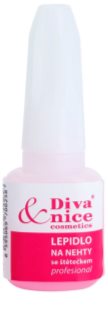
Classic nail glue is liquid and resembles regular superglue. It dries just as quickly. The downside of this glue is that it may not last very long or the consistency may be an issue. If the glue is too runny, it can seep into the cuticles, which doesn't look good and isn't great for the health of your nails. However, a brush applicator can help with this. Nail glue with a brush is easy to apply, similar to nail polish.
In a set with artificial nails
If you are buying artificial nails and already have nail glue in the set, you are halfway there. In this case, you can be sure that the manufacturer has chosen the best nail glue for the material and durability of the nails. You can then choose according to the design of the nails, the options for finishing, or the type of nail glue included.
Tip! Some brands rely on temporary, but repeated application. Their nail glue sticks firmly, but if you soak your nails in water for long enough, the nails will come off easily and you can reuse them again.
Gel nail glue
Gel nail glue can be used for both gel and acrylic nails. Its main advantage is its easy application and extra strong adhesion. It is easy to work with, which is why it is one of the most popular glue types. Simply apply the glue to the centre of the nail and press the artificial nail into place. Its main disadvantage is that it often requires curing with a UV/LED lamp. When purchasing, check whether this is the case.
UV nail glue
If you have a UV/LED lamp at home or are a professional manicurist, then you should definitely go for a lamp-curing nail glue. It is an extra-strong nail glue, whose main advantage is that it lasts up to several weeks. However, due to its progressive curing, it may take a little longer to apply. Gel nail glue is most commonly used in salons, but you don't have to worry about using it on regular acrylic nails, which are also suitable for subsequent nail sculpting.
How to apply artificial nails quickly and correctly
Before applying artificial nails, always read the instructions on the nail glue carefully.
- Nail preparation – Clean the nail surface thoroughly to ensure optimal adhesion of the nail glue.
- Applying the glue – Apply a thin layer of nail glue to both the natural nail and the artificial nail and press firmly for 10 to 30 seconds.
- Fixation and adjustment – Make sure that the nails are firmly attached and remove any excess glue. You can shorten and file some nails using paper nail files to achieve the desired length. Nails that are disproportionately long in relation to the nail bed will significantly reduce their durability.
Each type of nail glue has its own specific advantages. When choosing, consider what type of artificial nails you use, how long you want them to last, and what application method you prefer. However, always try to use high-quality nail glue so that you don't damage your own nails with artificial ones. Ideally, use care products and have nail treatments between applications.
Do you have a preference for regular nail glue, gel glue, or do you dare to try a UV/LED lamp?